Editorial Team · July 3, 2026
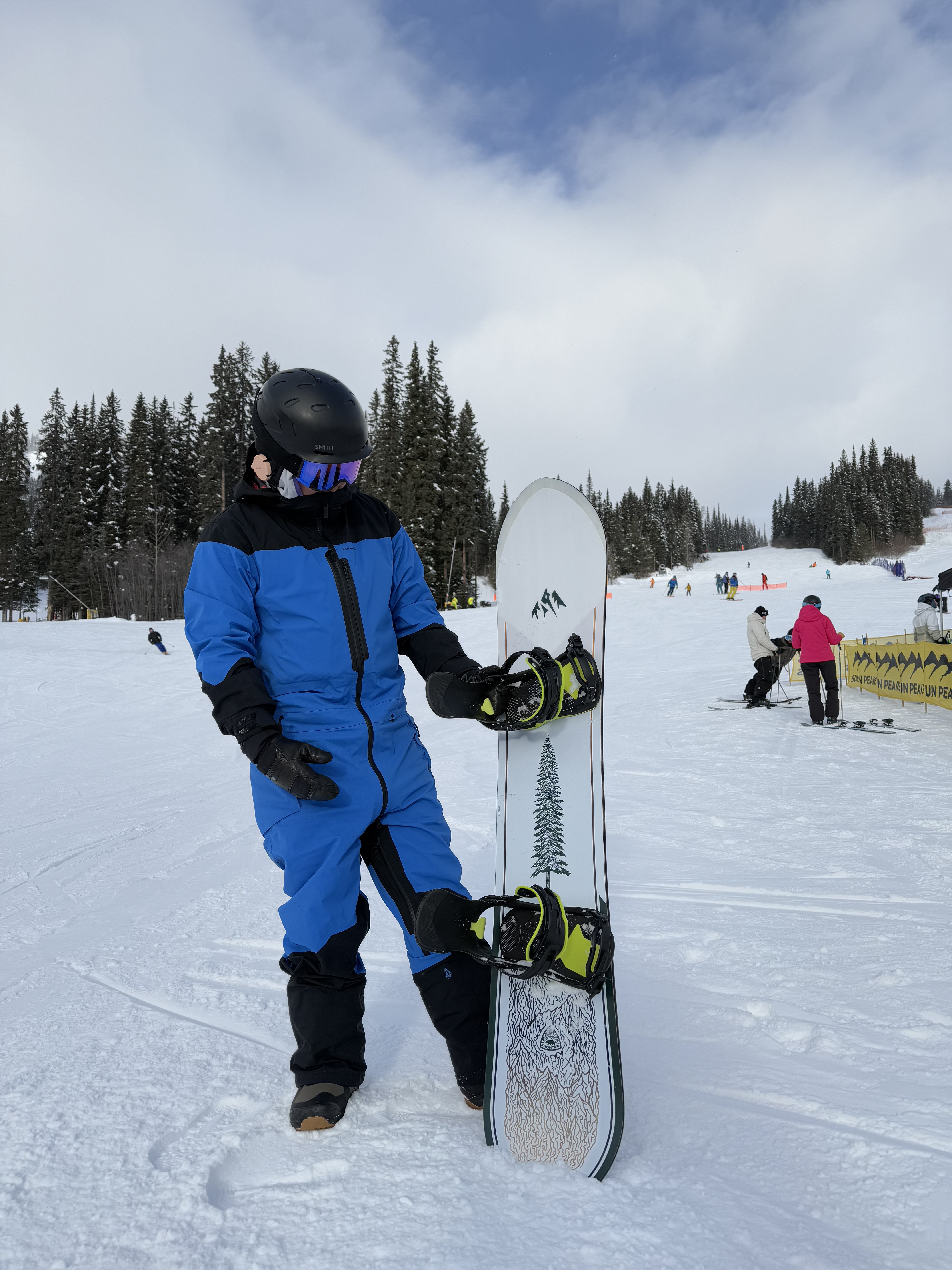
2026 Jones Frontier 2.0 Review
Rider: 175 cm / 87 kg Boots: Nidecker Kita, size 265 Bindings: Jones Mercury FASE Stance angles: +18 / -12 Test location: Sun Peaks Conditions: Hardpack, cloudy
# Jones Frontier 2.0 Review
Test Setup
Rider: Siri Height / Weight: 175 cm / 87 kg Rider Boot Size: US 8.5 Boots: Nidecker Kita Bindings: Jones Mercury FASE Stance Angles: +18 / -12 Board Size Tested: 159 Location: Sun Peaks Conditions: Hardpack, Cloudy
The Frontier has always been one of my easiest recommendations if someone wants to get into freeride without spending a fortune. It does a little bit of everything, it's reasonably priced, and it's approachable enough that you don't need years of experience to enjoy it.
With the 2.0 redesign, both the Frontier and Dream Weaver finally have a look that stands apart from the Twin series. Underneath, it's now built around a directional CamRock profile with 5 mm of taper—a classic all-mountain freeride recipe.
A fun little side note: my friend Bo, who's also the Jones rep for Western Canada, helped develop the new Frontier. I got to hear a bit about the thinking behind the redesign. Other than the Rally Cat, this is probably the most beginner-friendly board in the Jones lineup, while still keeping that unmistakable Jones ride feel.
Flex & Board Feel
The first thing I noticed was how incredibly smooth the board felt.
The lifted contact points make edge transitions almost effortless. Honestly, it borders on being *too* easy to ride.
That gives the Frontier a huge amount of forgiveness, although it also limits its overall performance ceiling. For the people this board is designed for, though, that's absolutely the right trade-off.
Compared to the previous Frontier, this version feels just a touch softer.
At my weight, I could overpower it fairly easily. The pop is decent, but when loading up an ollie I could feel the board flex more than I'd like, especially when trying to put a lot of energy into it.
Butter & Playfulness
Both the nose and tail are very easy to press.
The nose, especially, has a huge sweet spot where you can really lean on it without worrying about getting bucked back. If you're learning butters or just want to play around on side hits and flat ground, it's a really fun board.
Jones' Traction Tech also helps when conditions get icy. I wouldn't call it an ice specialist, but it's definitely reassuring to have that extra grip when the snow gets firm.
Groomers & Carving
For cruising groomers, the Frontier feels relaxed and confidence inspiring.
It's easy to roll from edge to edge, and you never feel like the board is trying to punish small mistakes.
That said, high-speed carving isn't really its specialty.
If you're smooth with your inputs, it'll carve just fine. But once you start pushing harder, the board feels like it wants to release the edge a little earlier rather than continue driving through the turn. The stability is good enough for most riders, but there is definitely a ceiling.
Off-Piste Performance
This is where the Frontier really shines.
In mellow off-piste terrain, it's comfortable and easy to manage. The 3D Contour Base in the nose naturally smooths out chopped-up snow, making rough conditions feel less harsh than they actually are.
Once the terrain gets steeper or demands more support from the board, though, you can start to feel the softer flex.
On the flip side, it's quick and agile in tight trees, and the subtle 5 mm taper gives you a little extra float in softer snow while also making turn transitions feel more natural on groomers.
Who Is This Board For?
The Frontier 2.0 is for riders who want to get into freeride without buying something intimidating.
It makes the most sense for beginners, progressing intermediates, lighter riders, or anyone who wants a board that feels relaxed and easy instead of demanding.
It's also a good choice if you ride mostly resorts but want something that can handle groomers, trees, side hits, chopped-up snow, and the occasional soft-snow day.
Stronger or heavier riders may eventually want more support, but for its target audience, the balance makes a lot of sense.
Final Verdict
The Frontier 2.0 feels like Jones fully committed to building a true entry-level freeride board.
It's comfortable, forgiving, easy to understand, and still carries the personality that people expect from a Jones snowboard.
Sure, stronger or heavier riders will eventually find its limits. But if you're buying your first freeride board—or you're a lighter rider looking for something that's simply easy and enjoyable to ride every day—this is one of the safest recommendations in the Jones lineup.
It won't be the highest-performing board on the mountain, but that's never what it was trying to be. Instead, it's the kind of board that lets you relax, build confidence, and have fun from your very first run.